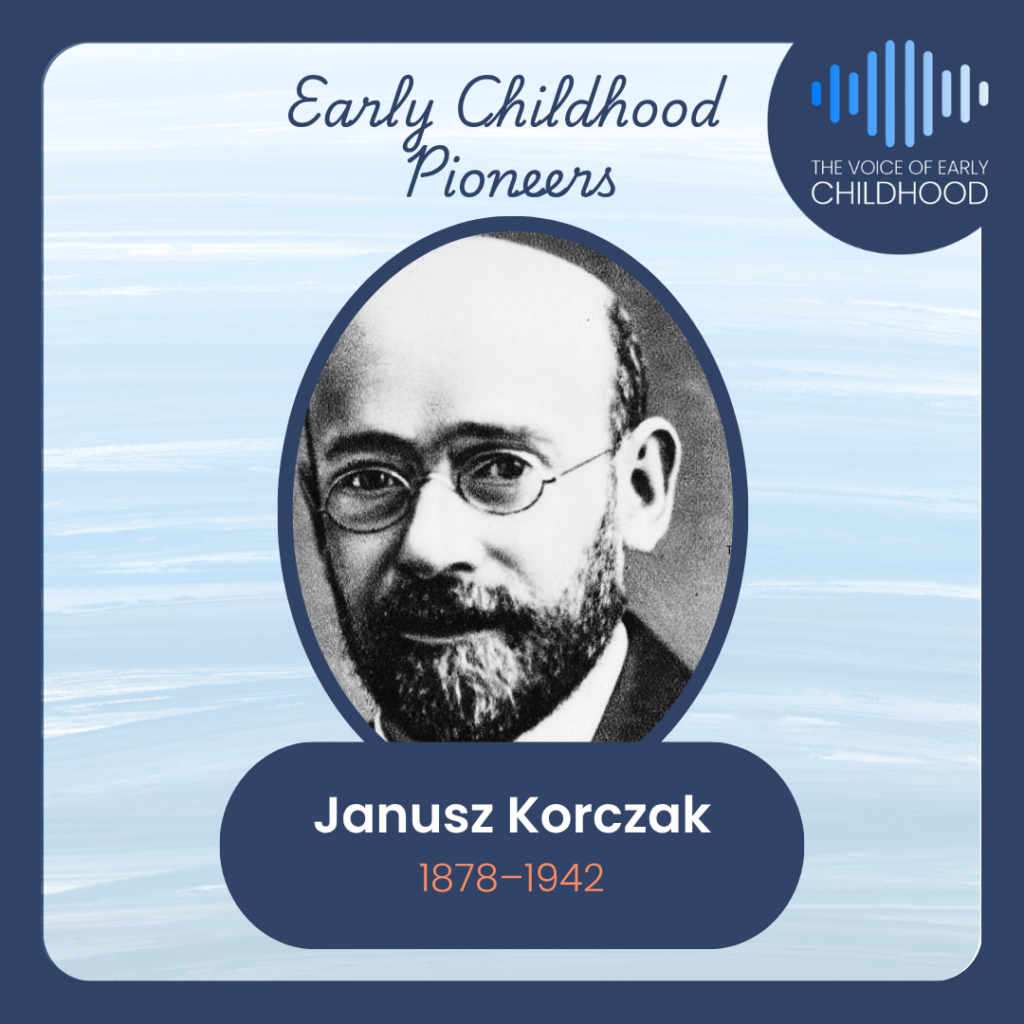
Carl Rogers (1902–1987)was an American psychologist and one of the founders of humanistic psychology. Born in Illinois in 1902, Rogers championed the belief that every individual has the capacity for growth, healing, and self-direction. His person-centred approach revolutionised therapy, education, and care practices by placing empathy, authenticity, and unconditional positive regard at the heart of human relationships. Rogers’ work continues to shape early years pedagogy, wider education, reflective practice, and child-centred approaches (Rogers, 1951; Rogers, 1961).
The person-centred approach
Rogers believed that individuals thrive when they are met with empathy, authenticity, and unconditional positive regard. His theory centres on the idea that people are the experts on their own lives and flourish in environments that nurture their innate potential. He rejected the idea of the practitioner as the “fixer” and instead saw them as a facilitator of growth.
In early years settings, this means recognising each child’s unique voice, valuing their lived experience, and creating emotionally safe spaces where they feel seen, heard, and accepted. The approach encourages practitioners to be genuine, emotionally attuned, and non-judgmental – fostering trust and connection.
Rogers emphasised the importance of the “self-concept” – how individuals perceive themselves – and argued that when children experience congruence between their inner world and external relationships, they develop resilience, confidence, and a strong sense of identity (Rogers, 1961; Rogers, 1951; Thorne, 2003).
Congruence
To be congruent, we need to be genuine in our dealing with children. Being true to ourselves, being true to our personal values, and this means that we are being authentic. Rogers believed that a person’s ideal self and their actual experience should be the same, or similar, to be completely congruent.
Congruence is more about the naturalness, the honesty, the openness, being present and being yourself.
Empathy
Empathy is arguably the most important of his core conditions and is usually understood as a willingness to put yourself in the position of another person. Rogers described empathy as the ‘sensitive ability and willingness to understand the client’s thoughts, feeling and struggles from the client’s point of view’.
In early years practice this is an active process of listening, observing, and imagining what life looks and feels like from their perspective. This involves tuning into the whole child – not just their words, but their tone of voice, facial expressions, body language, and the context of their experiences.
When we are truly empathetic, we respond to the underlying needs rather than just the outward behaviour.
Active listening
Carl Rogers’ concept of active listening is a cornerstone of his humanistic philosophy, and in early years practice, it becomes a powerful tool for nurturing connection, trust, and emotional safety. At its heart, active listening means being fully present – not just hearing words, but tuning into the child’s emotions, intentions, and unspoken cues. It’s about listening with empathy, without judgment, and with the genuine intention to understand the child’s perspective.
In practice, this might look like slowing down and giving a child your undivided attention when they’re expressing a worry, telling a story, or simply sharing a moment. It means reflecting back what you hear – “You felt sad when that happened” – to help the child feel seen and validated. Rogers believed that when people feel truly heard, they’re more likely to explore their thoughts and feelings openly, which is essential for emotional development and self-awareness.
Unconditional positive regard
Unconditional positive regard in early years practice means accepting and valuing each child wholly, without judgment or conditions. It’s about seeing the child as inherently worthy – regardless of their behaviour, emotions, or developmental stage – and responding with warmth, empathy, and respect. This approach fosters emotional safety, builds self-esteem, and encourages children to express themselves freely, knowing they are consistently supported and understood.
Links to early years practice today
– Empathy in action: Educators should actively listen to children, validate their emotions, and respond with warmth and understanding. This builds emotional literacy and trust.
– Unconditional positive regard: Every child deserves to be accepted without conditions. This means celebrating their uniqueness, even during challenging moments.
– Authenticity: Educators should model genuine emotions and responses, helping children understand that it’s okay to be real and vulnerable.
– Reflective relationships: The key person system can embody Rogers’ principles by fostering deep, attuned relationships that support emotional development.
– Empowering environments: Spaces should invite autonomy, choice, and self-expression – allowing children to explore who they are and what they can become.
(Boddey, 2025; Thorne, 2003).
How might have Carl Rogers extended his theory today?
Rogers might have explored how digital environments affect self-concept and relationships. He would likely advocate for emotionally intelligent technology use, and for maintaining human connection in increasingly virtual spaces. He might also have integrated ecological awareness, recognising the role of nature in nurturing wellbeing and identity.
Links or challenges to other pioneers/theory
Rogers’ work aligns beautifully with Maslow’s hierarchy of needs – both emphasise growth, authenticity, and the importance of emotional wellbeing.
His approach also complements Reggio Emilia’s image of the child as capable and competent, and Montessori’s respect for the child’s inner drive.
Rogers’ emphasis on emotional attunement and relational depth offers a counterbalance to more structured or outcome-driven models, reminding us that connection is the foundation of learning (Boddey, 2025).
Key takeaways
Carl Rogers developed the person-centred approach, placing empathy, authenticity, and acceptance at the heart of human development.
Children thrive when they feel emotionally safe, valued, and understood.
Early years practice should prioritise relationships, emotional wellbeing, and reflective listening.
Practitioners are facilitators of growth, not directors of outcomes.
Rogers’ theory supports holistic, child-led approaches and empowers children to develop a strong sense of self.
Critical considerations
The approach relies heavily on the emotional availability and self-awareness of the adult. Practitioners need support and supervision to maintain this.
The approach may be challenging to apply in settings with rigid structures or high accountability pressures such as baseline tests.
Explainer
Person-centred approach: A way of working that places the individual’s experience, emotions, and perspective at the centre.
Unconditional positive regard: Accepting and valuing someone without judgment or conditions.
Congruence: Being genuine and transparent in relationships.
Self-Concept: How a person sees and values themselves.
Facilitator: A supportive guide who nurtures growth rather than directing it.
References
Boddey, J. (2025). The power of connection in childhood: Growing whole, not just up. Early Insights. Available at: https://www.earlyinsights.co.uk/post/the-power-of-connection-in-childhood-growing-whole-not-just-up (Accessed: 07 September 2025).
Cooper, M. (2007). Humanistic Psychology and Counselling. Palgrave Macmillan.
Mearns, D., & Thorne, B. (2013). Person-Centred Counselling in Action. Sage.
Rogers, C. R. (1951). Client-Centered Therapy. Houghton Mifflin.
Rogers, C. R. (1961). On Becoming a Person. Houghton Mifflin.
Thorne, B. (2003). Carl Rogers. Sage Publications.
After 20 fun and exciting years working in early years I am now an early years consultant, supporting settings to develop a child centred approach to practice. My setting was twice graded Outstanding by Ofsted and was awarded multiple nursery awards. I am passionate about child centred practice, humanistic development and joy in early years.