Discover our full range of articles based on the EYFS areas of learning
Areas of learning articles you might like...
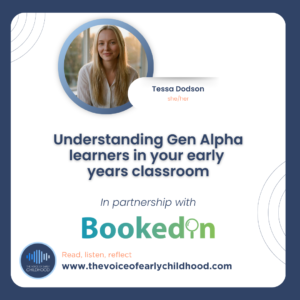
Generation Alpha children in today's classrooms differ fundamentally from previous generations. Born entirely in the 21st century, this cohort has experienced unprecedented technological immersion from infancy. Understanding how their developmental environment influences preferences can help educators create more effective classroom experiences. These experiences balance digital fluency with essential human connection.
Laughter is often treated as a pleasant extra, or even a distraction from learning. Drawing on their work across psychology, education, health and community contexts, Dr Jacqueline Harding and Dr Jawad Shah explore how shared laughter can support connection, curiosity, hope and resilience, while making space for children’s full emotional lives. What becomes possible when joy is taken seriously?
Social skills for children, such as sharing, active listening and resolving conflicts, flourish in diverse social settings. When children engage with peers beyond their daily routine in community spaces or public settings, they develop emotional intelligence and independence. Parents can further support these skills by offering gentle guidance and creating low-pressure opportunities for interaction.
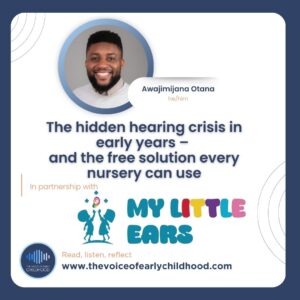
Too many children are quietly struggling to hear in early years settings, and it is often missed until their speech, learning and behaviour are already affected. This article and podcast episode share the story behind the Universal Glue Ear Screening Programme, explain what glue ear is and why it matters, and show how a free termly glue ear check can protect every child.
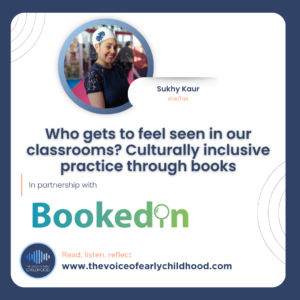
How do books shape children’s sense of identity, belonging and understanding of others? In this podcast episode and article, we explore the importance of representation in children’s literature and why inclusive storytelling matters in early childhood education. Reflecting on personal experiences, this conversation considers how books can help children feel seen, valued and included. We also discuss the role of sensory storytelling, immersive learning and culturally inclusive resources in supporting empathy, accessibility and belonging for all children.
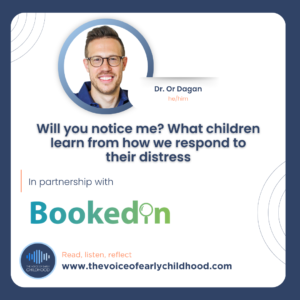
What if children’s distress is not just a problem to solve, but a signal of their need to be seen? This article and podcast episode explore how children’s expectations about availability and effectiveness of support from close others develop through repeated interactions with multiple caregivers. Using a psychological lens - in particular looking at attachment theory - we explore how educators and parents/carers can shape these expectations of care through their everyday responses to children’s distress.
The first five years are a once-in-a-lifetime window of opportunity for brain development. During this period, food does far more than fill tummies, it helps support learning, behaviour, emotional wellbeing and lifelong health. This article and podcast episode explore the emerging evidence around ultra-processed foods and why food quality matters during the early years.
On a warm day, it's easy to spot children running across a playground or playing games with friends. While they're focused on having fun, they may not notice when their bodies are becoming thirsty. Because they can lose fluids quickly during outdoor play, keeping children hydrated is an important way to help them stay comfortable and ready to enjoy the day.
Today’s parents and carers are shifting their hopes for children from outward success to inner security. This article and podcast episode explore how relationship-based parenting from birth, rooted in trust, respect, honesty, and communication, creates the emotional safety that allows children to thrive. When children feel seen, heard, and secure, happiness and success follow naturally.
Sound based emotional regulation is an emerging approach which uses carefully designed auditory experiences including voice, rhythm and specific sound frequencies to help children regulate their nervous systems. This article and podcast episode explore the science behind sound-based emotional regulation, why it matters in early childhood, and how sound can support emotional wellbeing in a variety of developmentally appropriate ways.
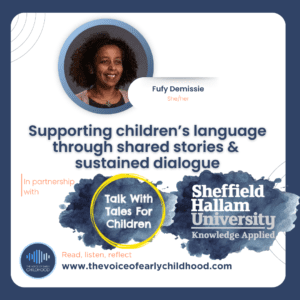
This article explores the TWiTCH (Talk with Tales for Children) programme, outlining its pedagogical foundations and structure, alongside findings from an independent pilot evaluation. It highlights how coach-led professional development and dialogic story practices can strengthen educators’ confidence and support children’s language, reasoning, and engagement during shared book reading.
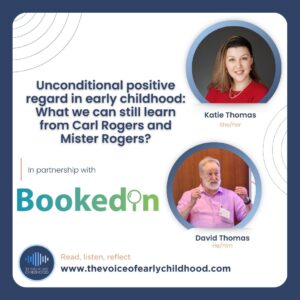
Despite having no connection, two men practicing at the same time, Carl and Fred Rogers, shared a last name and a value system. They made massive contributions to the practice of psychology, counselling, and early childhood education in America. David and Katie Thomas are a father/daughter duo spreading their messages and what we can still learn from them.
This article and podcast episode explore what it means for children to flourish in early years. They outline key characteristics of flourishing; positive relationships, emotional resilience, curiosity, and a sense of belonging, connecting these to effective early years teaching and learning. They provide practical strategies to embed flourishing, creating supportive environments, fostering emotional development and promoting strong partnerships with families.
The new government-backed Potty Training Guide moves away from the old ‘readiness’ model and promotes early, gradual learning and preparation from infancy. This article and podcast episode explore what the guidance means for families and settings, why coming out of nappies should be the final step in learning, and how practitioners and parents/carers can support confident, healthy toilet learning.
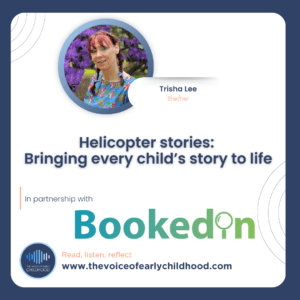
This reflective piece explores the power of Helicopter Stories to unlock children's thinking, imagination and emotional expression. Through real-life examples, it illustrates how storytelling can offer deep insight into children’s inner worlds, build community, and provide an inclusive, child-centred approach where every voice is valued and every story matters.
In early childhood, stories are more than words on a page. They are bridges—between experiences, identities, and possibilities. This idea sits at the heart of a powerful conversation with Laura Henry-Allain MBE: award-winning early education specialist, author, and creator of the ground-breaking CBeebies series JoJo and Gran Gran. In this podcast episode, Laura shares her insights on the transformative potential of books in early childhood settings, and how storytelling can offer every child a sense of belonging.
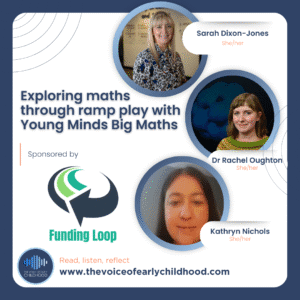
In Young Minds Big Maths, university mathematicians and early years educators collaborate to explore mathematics. We discuss how the project led us to create a booklet to help educators discover maths through play in their settings. The booklet uses real-life examples of ramp play—something children love—to show how building and experimenting with ramps reveals rich mathematical ideas.
Emotional intelligence refers to the ability to recognise, understand and manage one’s own emotions whilst also being able to empathise with and respond appropriately to the emotions of others. This article and podcast episode delve into this subject to explore what we can do to support emotional intelligence in the earliest years.
How early is too early for literacy? It is never too early! This article and podcast episode explore the significance of early literacy from the prenatal period onwards. Drawing on brain development research and practical strategies, it highlights the power of narration, modelling, and bonding through books—laying strong foundations for language and a lifelong love of reading.
This article and podcast episode challenges the conventional practice of tummy time, drawing on research from Pikler, Feldenkrais, and Goddard Blythe to argue that babies thrive when allowed to move freely and naturally. It explores how self-initiated movement supports neurological development, reflex integration, and emotional regulation—highlighting the importance of trust, observation, and respectful environments over intervention and milestone-driven practice.
Generation Alpha children in today’s classrooms differ fundamentally from previous generations. Born entirely in the 21st century, this cohort has experienced unprecedented technological immersion from infancy. Understanding how their developmental environment influences preferences can help educators create more effective classroom experiences. These experiences balance digital fluency with essential human connection.