Early Years Teacher, Setting Manager, Writer and Editor
As I have previously said publicly, I believe all sides must immediately move away from the toxic and divisive rhetoric and the cultivation of the us vs them culture surrounding early childhood in recent years. With the fresh leadership at the top of Ofsted and the likelihood of a new government coming in late 2024 – the timing has never been better to take that step.
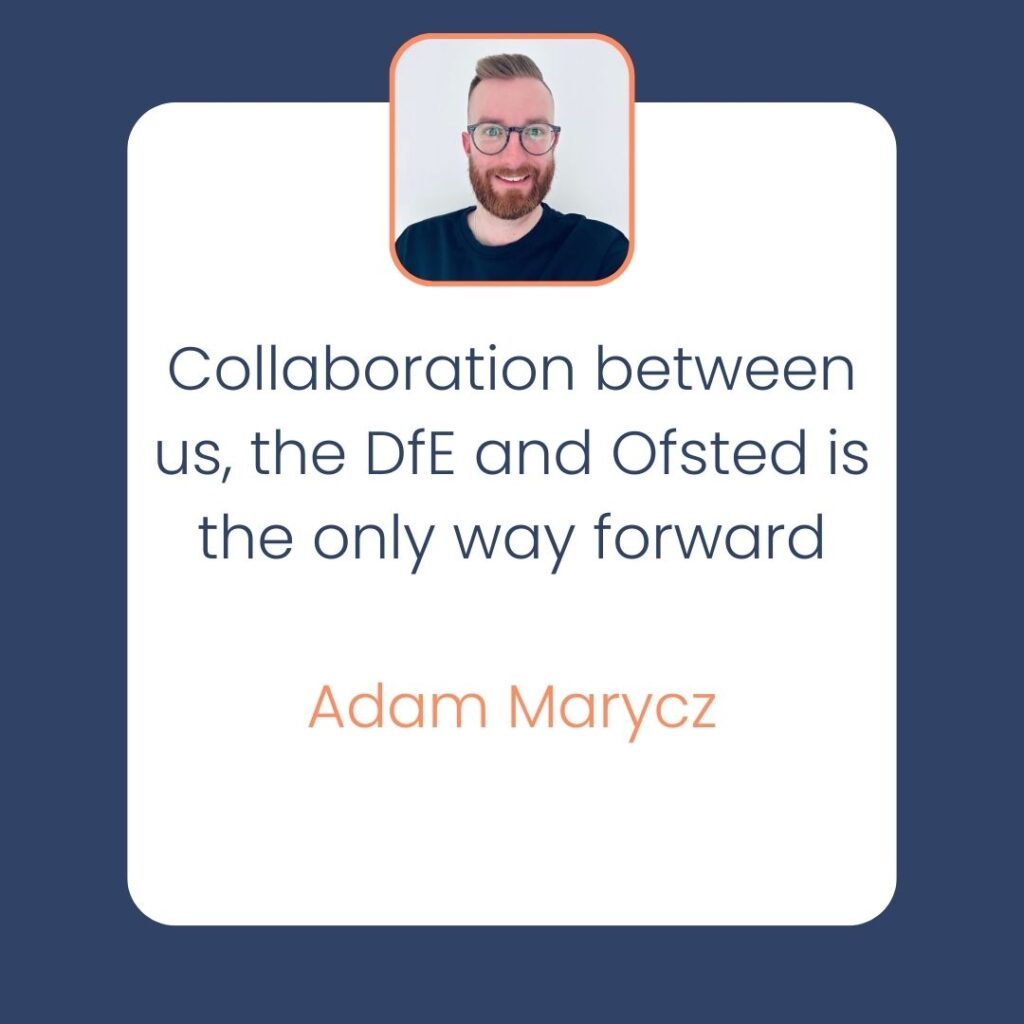
'Together let’s strive to ensure the educators, our children and their families are provided with all they need to grow and flourish '
In the podcast episode entitled ‘Ofsted’s voice must be heard whether we like them or not…’, based on my article of the same name, myself and Angelica Celinska reflected on the recent barriers that have been preventing a collaborative approach, particularly between the DfE, Ofsted and wider voices in the sector.
Being part of shared critical discussion is invaluable in helping to shape your thoughts and provide angles that you may not have considered otherwise. During the podcast recording I had so many reflections, some of which I shared at the time and some of which I required more time to process before sharing.
One of those reflections was about freedom of speech.
Freedom of speech
I briefly drew attention in my previous article to my view that the attempted silencing of critics by the DfE and Ofsted was akin to the restriction of freedom of speech we witness in anti-democratic societies around the world. However, what I did not consider in the same way was how the encouragement to disengage with both bodies is also an attempt to remove the voice from those people with whom they disagree or that they believe have treated them unfairly. This seems to go against the idea that everyone has the right to share their voice and it is not encouraging the creation of a safe space for critical discussion which I believe so passionately should be facilitated to allow the progress and growth we truly want to see.
With this in mind, I pose the following question: does disengagement make a collective goal more likely? Or does it further embed the us vs them culture; making it less likely to work towards a collaborative approach and build a fair and equitable education system?
I acknowledge one criticism which could be levelled at me is that as I was not ‘silenced’ myself then I should not be commenting on the decisions taken by others who have. As Angelica made clear in the discussion the lens through which we reflect on this situation is different because we have not experienced it first-hand. However, I do believe that having the opinion that it is time for both sides to deescalate is a valid opinion to share. As I said ‘two wrongs do not make a right.’
At this point I feel that it is also important to acknowledge something that many families who are looking to access the ‘free childcare’ and some working in the sector may not realise regarding the funding received to deliver the ‘free childcare’ promised. The funding hourly rate announced by the government is not what individual settings actually receive, as for a number of reasons, local authorities take a portion of this for their own use before giving the rest directly to eligible nurseries and childminders (Topping, 2023).
Ofsted’s priorities
Since Sir Martyn Oliver took over as Ofsted’s new Chief Inspector in January 2024 he has been faced with challenges on multiple fronts (see my previous article for background to this: Ofsted’s and the DfE’s voices must be heard whether we like them or not). On Thursday 29th February 2024 he set out his vision for early years and how Ofsted aims to move forward. Contained within this were several interesting glimpses into what will hopefully transmit into actionable change on the part of Ofsted with regards to their future engagement and policy decisions, as well as some of the usual language praising the role of the early years workforce.
He also addresses a concern of mine and many others within the sector regarding the decision to pause inspections of schools but not early years settings after a coroner ruled the tragic suicide of Ruth Perry suicide was ‘contributed to by an Ofsted inspection carried out in November 2022” at the school that she led,’ (Adams, 2023). He acknowledges that this ‘was a complicated and difficult decision’ but was taken because Ofsted is ‘the inspectorate for schools, while the Department for Education is the regulator. But for the early years sector, we have both roles’ and ‘so, we continued our regulatory work in the interest of keeping children safe and enabling new providers to open,’ (Ofsted, 2024). This is something I will acknowledge that I had not previously considered and whilst I am still frustrated with their stance, this sharing of the thought process behind their decision was welcome and does make this more understandable in my opinion.
Sir Martyn Oliver did also take the opportunity to confirm that like inspectors of schools, ‘early years inspectors will also have training on recognising and responding to visible signs of anxiety,’ (Ofsted, 2024).
The ‘Big Listen’
Perhaps the most welcome part for me however is where Sir Martyn Oliver lays out his ‘priorities.’ He defends the decisions made so far that were potentially made without consideration of the views of the wider sector as being ‘necessary, pressing, and will make a real difference,’ (Ofsted, 2024). However, he says he wants to develop any further changes with input from all of us. These will be influenced by a new initiative launching in March called the ‘Big Listen.’ This will be open to everyone involved in early years; educators, parents and children and more information will follow soon.
How can you get involved?
One of the core values at the heart of The Voice of Early Childhood is advocacy. Sharing the ‘voice’ of everyone matters. Your voice matters.
The Voice of Early Childhood wants to advocate for you, and the ‘Big Listen’ is one of the many ways we intend to do that. Whilst information on this initiative is limited right now, we have already begun collecting your views and we will announce more information on our approach to the ‘Big Listen’ in the coming weeks. But for now, click here to complete our online form to have your voice heard.
In the final part of Sir Martyn Oliver’s piece he says over the next 5 years (the length of his term as Chief Inspector) he will be ‘visiting settings, attending events, and contributing to webinars, podcasts, blogs and articles.’ As Angelica shared on the podcast episode, this is our public appeal to Sir Martyn Oliver or any other representative of Ofsted or the DfE to engage with us too. You are welcome on the podcast, you have already been invited to The Voice of Early Childhood Conference 2024 as delegates, and these invites will remain open now and into the future.
Together let’s strive to ensure the educators, our children and their families are provided with all they need to grow and flourish and be the best version of themselves and lets start that today.
Key takeaways
The silencing of the DfE and Ofsted critics does not support freedom of speech, and neither does denying the DfE and Ofsted the opportunity to share their voices with the early years sector: two wrongs don’t make a right.
Involving Ofsted and the DfE at early years sector events can provide educators with the chance to share their voices and practice with them.
Critical considerations
Does disengagement make a collective goal more likely?
How can we start to move towards building a fair and equitable education system?
How can we start to deescalate the divisive narrative between the early years sector and Ofsted and the DfE?
Would you like to share your voice with Ofsted?
HMI Chief Ofsted Inspector Sir Martyn Oliver announced that ‘…I want any future changes we make to be developed with input from all of you. I don’t believe it’s the job of a Chief Inspector to impose their own views or cause frequent disruption to the sectors we regulate,’ (Ofsted, 2024. My priorities for the early years sector).
Ofsted will be launching the ‘Big Listen’ to hear voices from the sector, but we don’t know what this will look like yet. So through our advocacy focus at The Voice of Early Childhood (TVOEC) we are collating the early years community’s voices. Do you have something to share with Ofsted?
Fill in the below form and we will share your voice with Ofsted through either the TVOEC podcast if they agree to come on as a guest, through an open letter or other ways – whatever is most appropriate.
Early Years Teacher, Setting Manager, Writer and Editor
Adam Marycz is an experienced Early Years Teacher and Manager of nurseries and wraparound provision settings in England. Outside of his day-to-day role Adam works as a Writer and Editor as well as a Lecturer and Researcher, whilst also providing advice and consultancy across the industry. Adam aspires to always be a ‘facilitator of critical discussion’ and engages widely in the many critical conversations surrounding the future of early childhood.
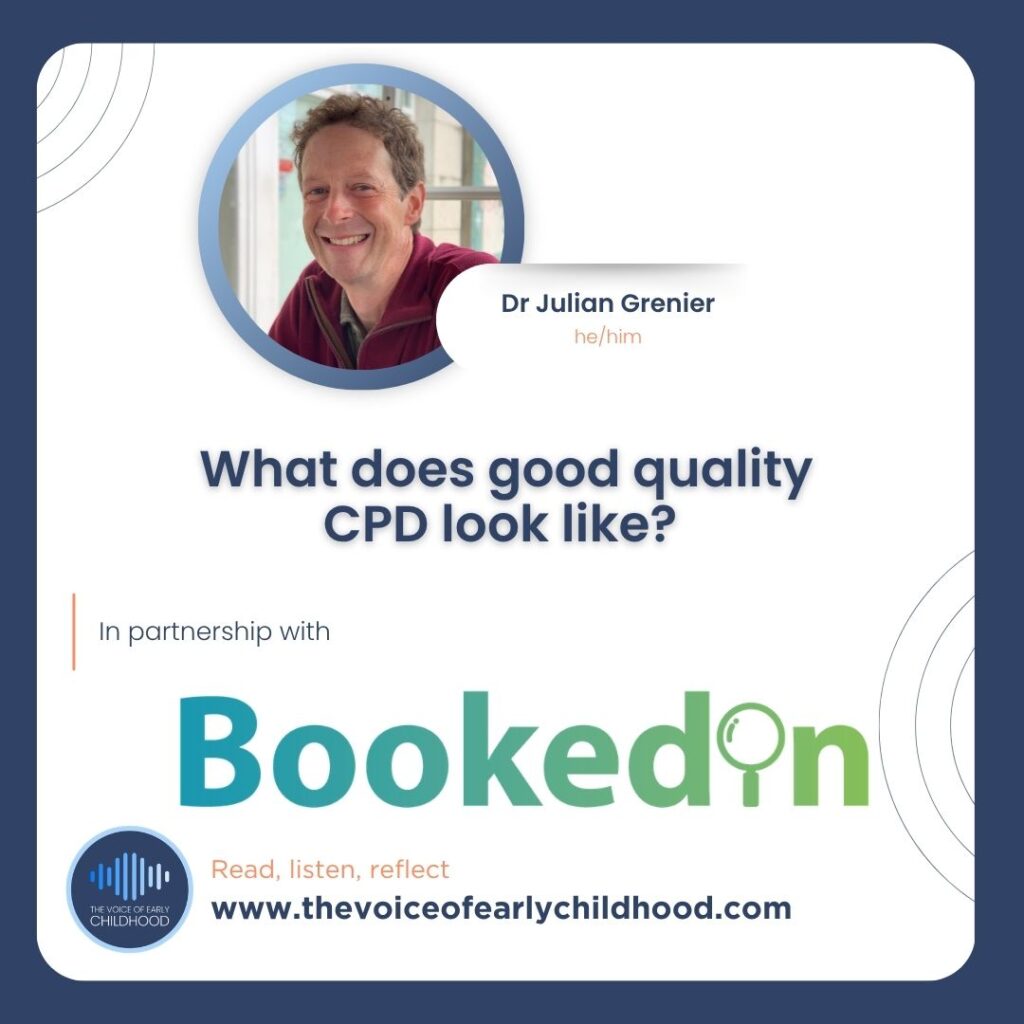
Professional development is something every early childhood setting invests in, yet it does not always lead to meaningful or lasting change. Training sessions may be delivered, feedback forms may be completed, and educators may leave feeling inspired. But the more important question is what happens afterwards: does practice change in ways that benefit children? In this live podcast conversation and article, Dr Julian Grenier CBE reflects on what effective continuing professional development, or CPD, can look like in early childhood contexts. A central message is that high-quality professional development is not defined by a single event, but by how learning is sustained, supported and embedded over time
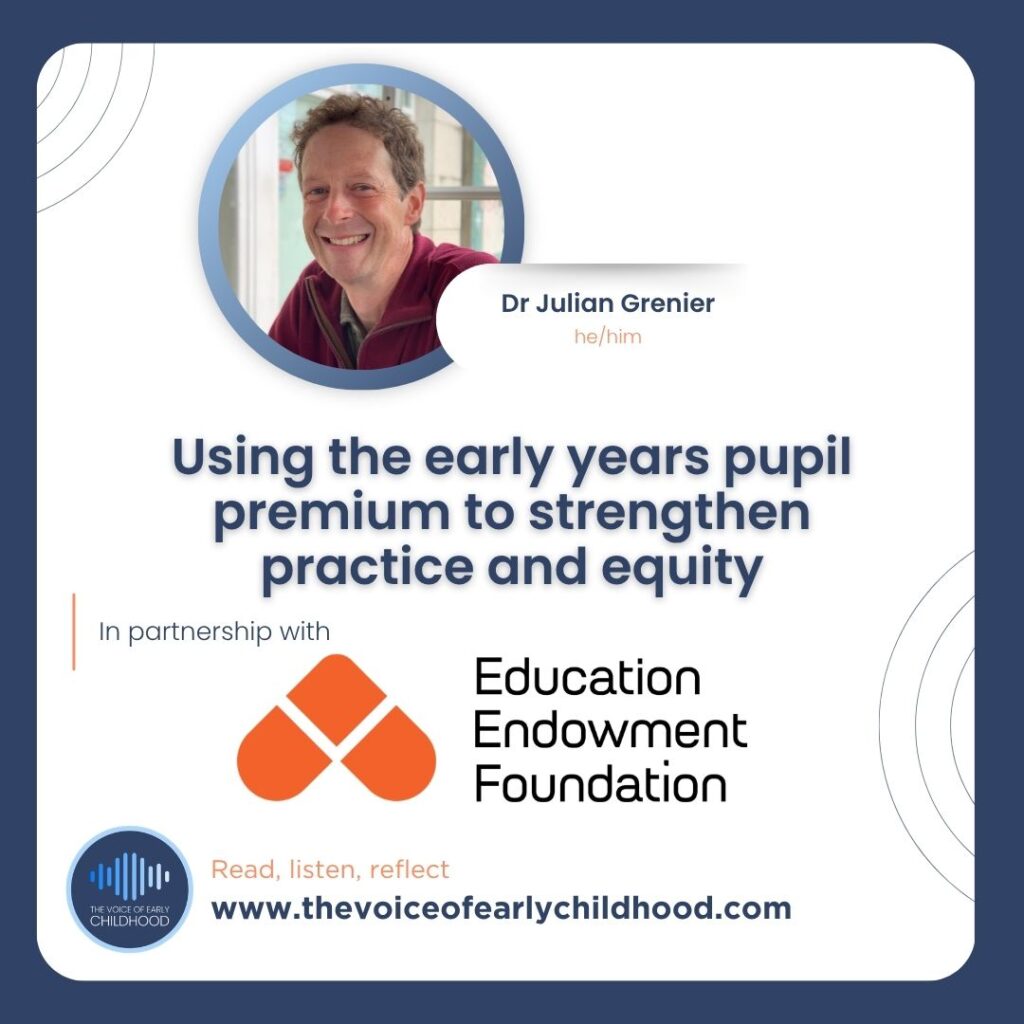
This article and podcast episode explore how the early years pupil premium (EYPP) can be used to strengthen practice and promote greater equity across the early childhood community. Drawing on research and professional experience, they reflect on why relationships with families matter, what evidence tells us about effective use of funding, and how a focus on high-quality provision can benefit all children—particularly those facing disadvantage. They also consider the importance of professional judgement, teamwork and sustained approaches to improvement in creating meaningful and lasting impact.
Professional curiosity is often spoken about in early childhood practice, yet its meaning can remain abstract until it is grounded in everyday interactions with children, families and colleagues. This article and podcast episode explore what professional curiosity looks like in practice, why it matters, and how it can be nurtured within early childhood communities.
The early childhood community in England is experiencing a significant shift in how early years provision is inspected and understood. Ofsted’s renewed early years inspection framework, now in place, shapes this episode and article. Drawing on a conversation with Jayne Coward from Ofsted, it explores what has changed, what remains central, and what this means for educators, children and families.
This article and podcast episode explore how Applied Behaviour Analysis (ABA) principles can be understood through EYFS language and practice. We show how strategies such as breaking learning into small steps, celebrating success, and creating enabling environments align seamlessly with EYFS priorities. Drawing on research evidence and examples from First Bridge Education, we highlight how educators can use evidence-based approaches to motivate children, reduce barriers, and support inclusive learning.
Play is not a luxury—it’s a biological necessity. From early childhood through adulthood, play fuels cognitive growth, emotional resilience, social competence, and physical development. This article and podcast episode explore why play matters, how it shapes learning, and what educators and caregivers must consider to protect and promote it.