Publication date
Author
-
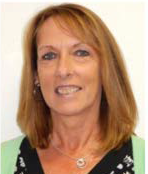
Anne Brass
Specialist Advisor for Early Years, School and Intervention for Education Durham
Strengthening purposeful curriculum design and implementation in the early years
Empowering leaders and educators in creating meaningful contexts for progressive teaching and learning
Curriculum project participants
Twenty-six maintained schools from across County Durham participate in the project. The group is made up of a range of primary, infant, nursery and special schools, reflecting the diversity of local contexts across the region and individual school structures. All participating schools have a range of age phases with their early years and are at different stages of curriculum development. The project is led and supported by local authority advisors.
Curriculum project rationale
Recent shifts in policy development have led to an increased focus on an evidence-led approach to optimising the impact of early childhood education (ECE) provision, and an enhanced spotlight on the construction, design and implementation of an appropriate, challenging and aspirational curriculum. How progress is most effectively facilitated and how knowledge and skills interact with the security of effective learning behaviours remains a critical area of professional development.
In addition to this, the imminent implementation of the extended entitlement will further require school based EYFS provision to reflect on, refine and develop their practice and provision to ensure that support, challenge, and progression are carefully reflected across all age groups and meet the needs of the youngest children within the provision.
Curriculum project context
In Durham, working as an early years advisory service across a diverse range of schools, it is very clear to see that, in relation to curriculum, one size does not fit all. Since changes to the EYFS framework in 2021 and the introduction of the Ofsted Education Inspection Framework, leaders and early years educators have strived to ensure that their schools have an ‘appropriate’ early years curriculum in place. All are at differing stages of development with differing expertise and experience, and all demonstrate different processes and approaches within this design.
Across Durham, since the changes to policy and the re-focus on curriculum, we have seen:
- Many schools working hard to reflect on their original early years curriculum and the pedagogical repertoire that supported implementation. They have rethought, adapted, reshaped, and clarified the design and implementation.
- Some schools starting curriculum design from scratch, working tirelessly to identify desired learning ambitions for end of each phase of early education; sharing learning sequences across the areas of learning and development; and using this to sharpen pedagogy and their responses to children’s learning and experiences.
- Others ‘lifting’ curriculum overviews found on the multitude of social media sites to implement in their provision.
- Some schools still viewing activities as their curriculum core rather than desired learning and progression.
- Many early years curricula reflecting a top-down expectation shared by primary subject leaders in school which do not always relate to the needs of our youngest learners.
And…early years leaders predominantly undertaking this development, often with limited time, input, and support beyond the early years team.
In short, leaders are working hard to ensure that the early years curriculum is right for their school and their children. However, designing curricula that reflects both the breadth of the EYFS framework and the specific local and school context is both time consuming and challenging, as it is bespoke to each individual school. Such design requires specific knowledge, and to ensure its success, this work must be understood and valued by the whole school team, both within early years and beyond. Early years leaders should not be expected to develop the early years curriculum in isolation. It should be the work of the whole school and time should be allocated to ensure the development of a curriculum and pedagogical repertoire that reflect the children in their school, the community they live in, and one which sets the foundational curriculum for the rest of the school.
Working in isolation with, in some cases, limited professional knowledge and confidence, can be daunting for staff. The early years curriculum must meet the statutory requirements of the EYFS framework but also reflect the local context and school vision and values. It should hold learning behaviours at its core, enabling children to become proficient learners. Design in this area requires skill, understanding, time and dedicated continuous professional development. Educators and leaders within the EYFS require specific and specialist support to fully embrace the purpose and understanding of these developments and internalise the rationale to augment their professionalism. This will both enhance and increase outcomes for children – in all elements of learning and development – and consolidate educators’ ability and confidence in articulating how the uniqueness of EYFS practice and provision supports successful learners.
The Durham local context identified the need to ensure that high quality practice, and the thorough understanding of its rationale and evidence base, remains central to professional development and understanding of the EYFS. In addition to EYFS educators developing their practice, there is also a pronounced need for both involvement and engagement from school leadership and senior management.
Curriculum project aims
The Durham Early Years Curriculum Project was established to meet the needs of the local context and focuses on the process of curriculum design and implementation rather than providing a ‘completed’ curriculum to lift and use. It aims to empower leaders and educators in creating meaningful contexts for progressive teaching and learning within their own school, with a particular focus on relevant curriculum content for the youngest children.
The project aims to provide space and professional reflection for early years leaders, together with their senior and subject leaders, to explore and further develop their early years curriculum. It is hoped that this will empower schools, through a collective voice and shared messages to identify what is important for their children, regardless of external pressures, and use this to shape curriculum design and implementation. This will both enhance and increase outcomes for children – in all elements of learning and development – and consolidate educators’ ability and confidence in articulating how the uniqueness of EYFS practice and provision supports successful learners.
The first phase of the project aims to:
- Improve knowledge and understanding of early years curriculum, pedagogy and assessment and enhance the ability of senior leaders to ensure and assure the quality of early years provision
- Explore and define values and aspirations for the children they work with and understand and articulate the needs of children in EYFS provision
- Reflect on current curriculum and identify meaningful ‘content’ relevant to their learners that ensures a curriculum progression that accumulates and deepens appropriate knowledge, skills and learning behaviours
- Explore and develop a pedagogical repertoire that defines appropriate and effective approaches to deliver the curriculum, centred around the acquisition of learning behaviours and relevant knowledge and skills
- Strengthen the leadership
Building on this, the second phase will showcase the project schools to further support developments in a wider range of schools across the county.
The project model
To support schools in all aspects of development and to ensure success, the delivery model is evidence-based. It applies the professional development forms, programmes and mechanisms found in the guidance report Effective Professional Development from the Education Endowment Foundation.
Project delivery includes:
- Regular professional development through 6 training events focused in turn on the EYFS areas of learning and development, alongside the characteristics of effective learning and learning behaviours. Early years leaders attend all events and are joined, at relevant sessions by their head teacher, senior leaders or subject leaders. The sequence of the events focuses initially on the underpinning prime areas of learning and characteristics of effective learning and learning behaviours, followed later by a focus on the specific areas of learning.
Each session allows for exploration of relevant education policy and theory in a practical sense and in a safe and communal environment. During afternoon sessions participants work together to explore learning trajectories that support curriculum design and pedagogical repertoires to support implementation.
- Gap tasks between each training event ensure key messages from the sessions are explored and acted on in school, allowing participants to demonstrate the process with colleagues.
- Geographic cluster networks are facilitated by project advisors and held termly to bring participating schools together in their locality. These networks are accessible to early years leaders from the project alongside any other school staff members. They enable peer support for participants to share, discuss and reflect on their developments, successes and challenges.
- Termly advisory visits provide coaching and mentoring support for individual schools, following up and reflecting on the training events and implications for the individual school.
The project training events are pivotal to the project success and therefore Durham have developed a partnership with Corman Hempsalls enabling Jan Dubiel to deliver the training events and support the focus and direction of the project in its entirety.
Further reading
Education Endowment Foundation – https://educationendowmentfoundation.org.uk/
Effective professional development (Education Endowment Foundation) – https://educationendowmentfoundation.org.uk/education-evidence/guidance-reports/effective-professional-development
About the author
-
Specialist Advisor for Early Years, School and Intervention for Education DurhamView all posts
Anne Brass is a Specialist Advisor for Early Years, School and Intervention for Education Durham.