Looking in the wrong place
A ‘badly behaved’ child wants something they cannot get. Not consciously. Not deliberately. Not manipulatively. But biologically.
If you are raising a child who has been described as difficult, defiant, oppositional, ADHD, ODD, ASD, highly sensitive, or simply hard work, I want to begin by saying something really important:
Most parents I meet are doing their very best. They care deeply about their children, and despite all their effort are often left wondering why family life feels so much harder than it should. In my experience, the issue is seldom a lack of effort. In fact, I think many parents are trying harder than ever.
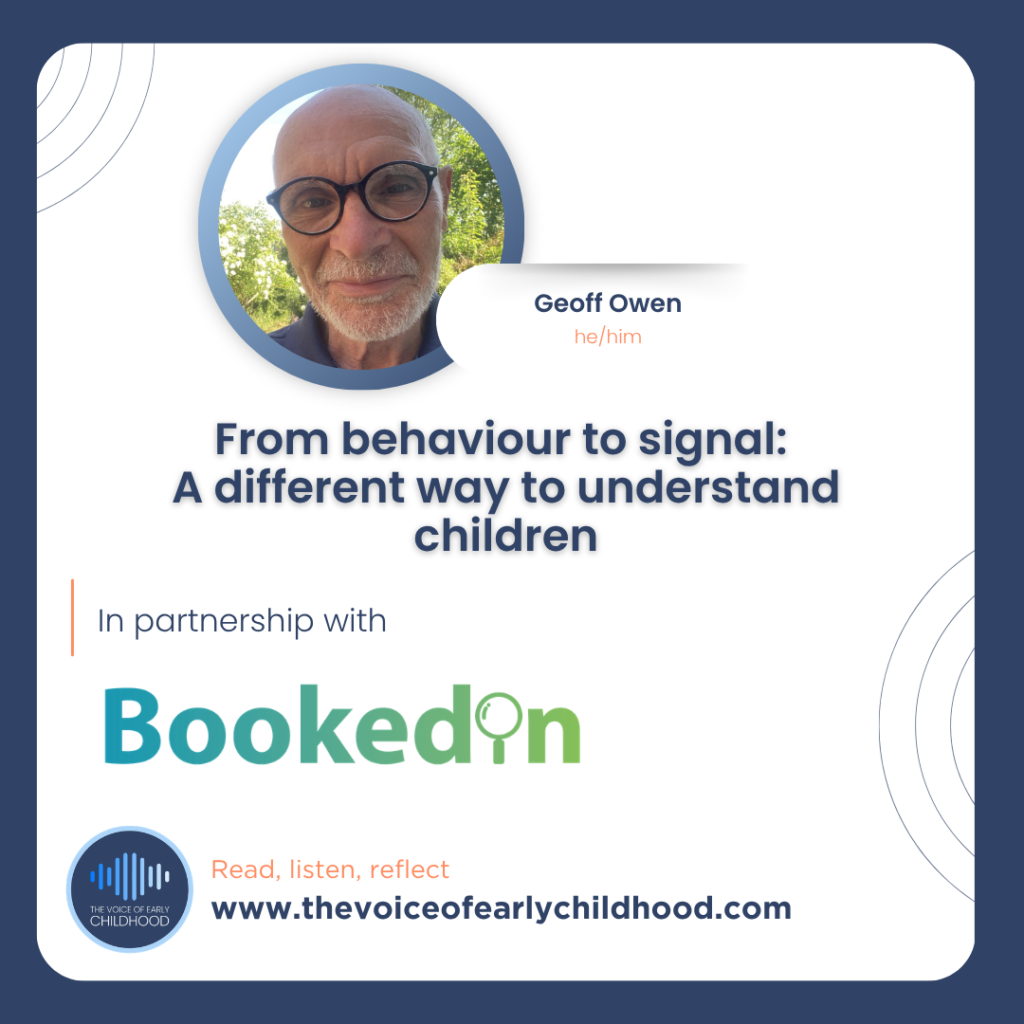
What if we’ve simply been taught to look in the wrong place? Most parenting advice focuses on behaviour. How to stop it, reduce it, manage it or control it. Yet over the years I have come to see behaviour very differently.
Imagine standing beside a river and noticing that the surface is covered with dead fish. I think it’s fair to say that most people would immediately become curious about the water. We’d assume that something about the water must have changed. Something in the environment is affecting the fish. Yet when it comes to children, we often do the opposite. We focus on the behaviour. The defiance. The withdrawal. The anxiety. The screen use. The tantrums. In effect, we study the fish whilst paying very little attention to the water. That shift in perspective changed everything for me.
The expectations every child is born with
I’ve come to see that children are constantly responding to the environment around them. Through their body, not language. More on this later. From the moment a child enters the world, they are sensing through touch, sound, movement, smell and the countless signals coming from the people and environment around them.
Every child is born with a set of inherited and therefore innate expectations. Not expectations that are conscious or considered. I mean expectations that have accompanied human survival for thousands of years. These expectations were not invented by parenting experts. They are the experiences that accompanied our successful survival and became part of the blueprint every child is born with.
Children expect to be immersed in life, close to those responsible for them, observing life unfold around them and experiencing adults who convey certainty. They are not consciously aware of these expectations, yet their senses are constantly registering whether what they are experiencing matches what they are biologically prepared to expect. When it does, children tend to settle. When it doesn’t, adaptation begins.
Why modern parenting has become so exhausting
This is one reason I think modern parenting has become so exhausting. We spend enormous amounts of time explaining, negotiating and managing behaviour, yet young children are primarily responding to experience rather than explanation. One thing that reveals this is how naturally we speak to babies. Our voice changes, our language simplifies and our facial expressions become more animated, despite nobody teaching us to do it. Somehow, our
biology already understands that children experience far more than they comprehend intellectually. Which means the environment matters enormously. And within that environment, the parent matters most.
The parent as the answer
One of the ideas I return to repeatedly in my work is that the parent becomes the answer. Not because parents are perfect or know everything, but because from the child’s perspective they are the primary reference point through which the world is experienced. This is why I often say that children respond less to what we say and more to what we convey.
A parent can learn all the right words and use all the recommended techniques. Yet if underneath there is uncertainty, overwhelm or inconsistency, a child’s senses are often responding to that long before they are able and equipped to respond to the spoken word. The child is not analysing the parent. The child is experiencing the parent. And that distinction is far more important than most parenting advice acknowledges.
Behaviour or adaptation?
Over the years I have largely replaced the word behaviour with adaptation because it immediately changes how we see the child. A defiant child becomes a child adapting. A withdrawn child becomes a child adapting. A child glued to a screen becomes a child adapting. The question is no longer, “How do I stop this?” The question becomes, “What is this adaptation responding to?” Some children fight, some withdraw, some become difficult to reach and others become highly compliant. The adaptations differ, but I have found they often serve one of two purposes: to restore what is missing, or to provide relief from the discomfort created by what is missing.
What screens might really be telling us
Imagine being stranded alone on an island. Days pass and then one morning a ship appears on the horizon. Even the quietest, most reserved person on earth would begin waving, shouting and doing everything they could to be noticed. Not because they consciously sat down and decided upon a strategy. But because the ship represents something profoundly important – safety, relief, the possibility of survival. When survival is involved, the body takes over.
Children are no different. When something important is missing, adaptation begins. Their biology is responding to the environment they are experiencing. This is one reason I see screens differently from many people. Most conversations focus on how long a child is on a screen and whether it should be restricted or removed. I find myself becoming curious about a different question. What is the screen providing?
For most of human history, children were immersed in life, observing adults, witnessing work being done and seeing problems solved around them. Today, many children spend far less time experiencing meaningful adult activity and far more time being managed, entertained or educated.
A screen can provide movement, stories and experiences that absorb attention and offer relief, not because the screen is the answer, but because it may be helping the child adapt to
something. Which is why removing the screen often fails to solve the problem. The more useful question may be: What is the screen helping the child adapt to?
What I learned from my own life
One of the reasons I feel strongly about this is because I have seen it in my own life. Looking back, there were experiences I sought outside my family that my parents never knew about. Not because they did not love me. Not because they were bad parents. But because something I was searching for was not being fully met within my experience of home. I was completely unaware of it at the time. Only years later, through personal reflection and therapy, did I begin to understand what had been driving some of those choices. That insight changed how I understand children. Human beings are almost always responding to something.
What happened when one mother saw behaviour differently
One example that comes to mind is Janet. Janet was a single mother and a highly successful currency trader working in the City of London. Yet when it came to her twelve-year-old son, she felt stuck. Their relationship had become distant and he spent most of his time in his room on his Xbox. When I first met Janet, I asked her a simple question. “What is the one thing you would most like to see change?” Her answer was immediate. “I just want my son to be interested in me.” That became our reference point. Not reducing screen time. Not fixing behaviour. Not controlling outcomes. Simply understanding what her son’s behaviour might be responding to.
Over the weeks that followed, Janet began making small but significant changes in how she viewed her son and the environment he was experiencing. Nothing dramatic. No reward charts. No punishments. No complicated strategies. Just a different way of seeing what was happening. Then one evening she called me. She had come home from work and started preparing supper. A little while later her son appeared in the kitchen doorway. He looked at her and said: “Hi Mum. How was your day?” For most people that might sound like a very ordinary moment. For Janet it was extraordinary. Not because she had finally found the perfect parenting technique. But because something important had shifted. Her son had become interested in her again. Not because he was asked to. Not because he was persuaded to. But because the adaptation was no longer needed in the same way. The behaviour had begun to settle.
Curiosity changes everything
If there is one thing I would encourage parents to take away from this article, it is this: Become curious about the behaviour and what your child may be responding to. Because behaviour rarely appears without a reason. That does not mean parents should strive for perfection. Perfection is neither possible nor necessary. What matters is understanding. Understanding that many behaviours we describe as difficult, oppositional or defiant may actually be adaptive responses to an experience that does not fully match what the child is biologically expecting.
For more than thirty years I have been exploring these ideas through my work with parents and children and through my books, The Parenting Assumption and ODD: A Non-Clinical Approach to Children Who Say No. Both challenge the assumption that children need fixing. Instead, they invite us to consider a different possibility – what if the behaviour is not the problem at all, but the signal? Because when behaviour begins to make sense, something remarkable often happens. Parents stop fighting symptoms. Children stop being viewed as problems. Families begin to understand one another differently. And when what is missing is restored, behaviour often settles naturally. Not because it has been forced to. But because it is no longer needed.