Learned helplessness: Are we setting children up for failure?

Publication date

12 August 2024

Author

Feeling helpless and lacking control in your own learning and wider life seems to be a common attribute being noticed in children and young people currently. It is important to begin unpicking this from early childhood…Dr Sue Allingham reflects on how the EYFS Characteristics of effective teaching and learning are supporting children to be resilient and build a growth mindset…yet what goes wrong the minute they step into a school?

Learned helplessness:
What does it look like and how can we prevent it in early childhood?

Introduction

Ever since the idea of ‘learned helplessness’ came up in a conversation I was having with a friend who teaches senior school children, I have begun to reflect on whether we see this effect with the youngest children. He had noticed that the children he works with needed to be led through every task and were anxious to work on their own without support.

Why should we be aware of learned helplessness?

Once I became aware of the expression it resonated with something I had been noticing happening in early years settings. I started to see a pattern and the more I talked about it with people the more the idea formed. In this way it became clear to me that we have to be aware of the concept of ‘learned helplessness’ and exactly how it is relevant in early childhood education and care (ECEC).  

For example, a few years ago a colleague told me about a child she had met when observing in a reception class. The children had just got up from a whole class carpet session and were dispersing around the environment. My colleague noticed a little boy who was standing alone looking a bit bewildered, so she went over to him and engaged in conversation. He told her that he did not know what to do as his teacher had not told him what his ‘learning intention’ was. 

This is a good example of ‘learned helplessness’ at a very early age…why?

What does learned helplessness mean?

At the end of this article there is a dictionary definition of ‘learned helplessness’, but it is worth reading more widely around the concept as it is increasingly clear why we need to be aware of it in ECEC. 

A good reference point to start researching the idea is the Harvard Centre on the Developing Child. This is because ‘learned helplessness’ is actually related to brain development. It is rooted in how relationships are formed and the effect and impact they have. 

‘The brain systems that govern motivation are built over time, starting in the earliest years of development. These intricate neural circuits and structures are shaped by interactions between the experiences we have and the genes we are born with, which together influence both how our motivation systems develop and how they function later in life.’ 

– (National Scientific Council on the Developing Child, 2018). 

Could we say that the little boy mentioned above was motivated?  If we can say he was, then how was he? If not, then what was preventing motivation?

What does learned helplessness mean in early years?

A good way to understand what ‘learned helplessness’ might be in early years is to compare what has been discussed above to the Characteristics of Effective Teaching and Learning which have long been part of The Statutory Framework for the Early Years Foundation Stage (DfE, 2024). They are – 

Playing and Learning 

ENGAGEMENT  

Finding out and exploring  

Playing with what they know  

Being willing to ‘have a go’ 

Active Learning 

MOTIVATION  

Being involved and concentrating  

Keep trying  

Enjoying achieving what they set out to do 

Creative and Critical Thinking 

THINKING  

Having their own ideas  

Making links  

Working with ideas 

The Birth to Five Matters document (Early Years Coalition, 2021) is a useful reference point to read around what each of the characteristics means to inform practice and provision. But, if you reflect on what has been said in the previous section about the meaning of ‘learned helplessness’, then filter it through the characteristics and what they mean, it can clearly be seen that developmentally informed practice in ECEC should not engender it, notice the highlighted words below –  

‘In play children also have opportunities to engage in Active Learning, as they are intrinsically motivated toward their own goals. By tuning in to the children and providing time, space and resources for children to manage, adults can foster children’s growing powers to concentrate with deep involvement. Sensitive adults can support resilience by helping children to develop a view that not getting the result they (or others) wanted or were expecting is not a failure, but an opportunity to try again, learn and develop, and that they can keep on trying and persisting even in the face of challenge or difficulties’ 

– (Early Years Coalition, 2021, p.23). 

However, there is a problem here. Although the Characteristics of Effective Teaching and Learning are enshrined in law, they are all too often overlooked in practice and provision. This was demonstrated in the story of the little boy at the end of carpet time.  He did not feel he could act independently for fear of not getting something right. 

So, if this situation is happening in ECEC, it is of no surprise that it is happening in senior schools as the children will have learned from an early age. But how has this come about? 

Historically there are several reasons that could be given for the perceived rise in children, and now young adults, demonstrating learned helplessness. The advent of the National Literacy Strategy in 1998, closely followed by the National Numeracy Strategy a year later, started the trend towards very structured teaching sessions during which even the youngest children were choreographed through set numbers of minutes at a given activity, either with or without an adult. These sessions were planned months in advance and carried out as planned. 

Although this method of teaching Literacy and Numeracy was never statutory, it became a national expectation. And the mornings of all children across primary, and even starting in early years, became heavily directed by adults. Since then, despite the requirements of the EYFS Statutory Framework, we have seen this type of restrictive practice become commonplace. The Strategies are no longer current but have been replaced by ‘systematic synthetic phonics’ programmes which require an hour a day, alongside predetermined maths programmes which dictate another hour. Teachers are now working with dictated timetables and predetermined teaching content. They also themselves as educators feel helpless against these expectations. 

The characteristics and principles of the EYFS become lost

In the midst of all these expectations and adult led agenda, the ‘unique child’ and developmentally informed practice and provision – the ‘enabling environment’ – are increasingly lost.  Resulting in the children conforming to the routine. Thus we have the beginning of ‘learned helplessness’. The children are likely to become demotivated, or worse filled with dread from knowing what is coming next in the schedule. I have seen this happen. 

This can and must be avoided. I often ask people to consider ‘whose agenda is it?’. There is a huge pressure to buy in ready-made curricula and programmes of phonics, but it is important to remember the emphasis of the Statutory Framework. 

As you finish this article and watch the podcast reflect on this statement – 

‘Give children agency. Children are more motivated when they have some degree of self-determination, and can elect to pursue tasks that are personally meaningful. When they have a choice of projects, or at least a little wiggle room as to how a task gets done, children are more likely to stay engaged’.  

– (National Scientific Council on the Developing Child, 2018b, p.10). 

Key takeaways

  • Learned helplessness in early childhood can be developed from an over-reliance on the adult
  • The Characteristics of effective teaching and learning seem to encourage the opposite of learned helplessness – so what is going on?

Critical considerations

      • Reflect on the balance, or lack of it, in your practice and provision. Whose agenda is it? What decisions are made by the children? 
      • Are you and your team truly promoting the Characteristics of effective teaching and learning? Or is there contradiction between this and some of your practice? 
    •  

Definitions:

Learned helplessnessa condition in which a person has a sense of powerlessness, arising from a traumatic event or persistent failure to succeed. It is thought to be one of the underlying causes of depression (Oxford Languages, 2024).

References

DfE, 2024. Early years foundation stage (EYFS) statutory framework. Available at: https://www.gov.uk/government/publications/early-years-foundation-stage-framework–2 Date accessed: 25/07/2024  

Early Years Coalition, 2021. Birth to 5 Matters: Non-statutory guidance for the Early Years Foundation Stage.  St Albans: Early Education.  Available at https://birthto5matters.org.uk/wp-content/uploads/2021/04/Birthto5Matters-download.pdf Date accessed: 25/07/2024  

National Scientific Council on the Developing Child, 2018a. Understanding Motivation: Building the Brain Architecture That Supports Learning, Health, and Community Participation: Working Paper No. 14. Retrieved from www.developingchild.harvard.edu. Date accessed: 25/07/2024  

National Scientific Council on the Developing Child, 2018b. Understanding Motivation: Building the Brain Architecture That Supports Learning, Health, and Community Participation: Working Paper No. 14. Retrieved from www.developingchild.harvard.edu. Date accessed: 25/07/2024  

Oxford Languages, 2024. Learned helplessness definition. Available at: https://www.google.com/search?sca_esv=4480d324391c2d9e&sca_upv=1&sxsrf=ADLYWILOdP3Y-QK2Bd4YbkROmA9Ontg89Q:1721651082043&q=learned+helplessness&si=ACC90nxFKxGIkEronL_t-_P1vo-ZeX591PS7azQOfTV9xMqGHNJi1b_rflZ1rjfLxCDBeOzH-q-_HzV9rG5NpwPNXBHReSXtB6vVO-N3kb2PZLflJCFLABI_J6M4Nt_XzByA71x_GP-o&expnd=1&sa=X&ved=2ahUKEwi_lrCJ0rqHAxX3V0EAHV0IDVQQ2v4IegQIGhAS&biw=1440&bih=637&dpr=2 Date Accessed: 22/07/2024 

About the author

  • Independent consultant, author and trainer

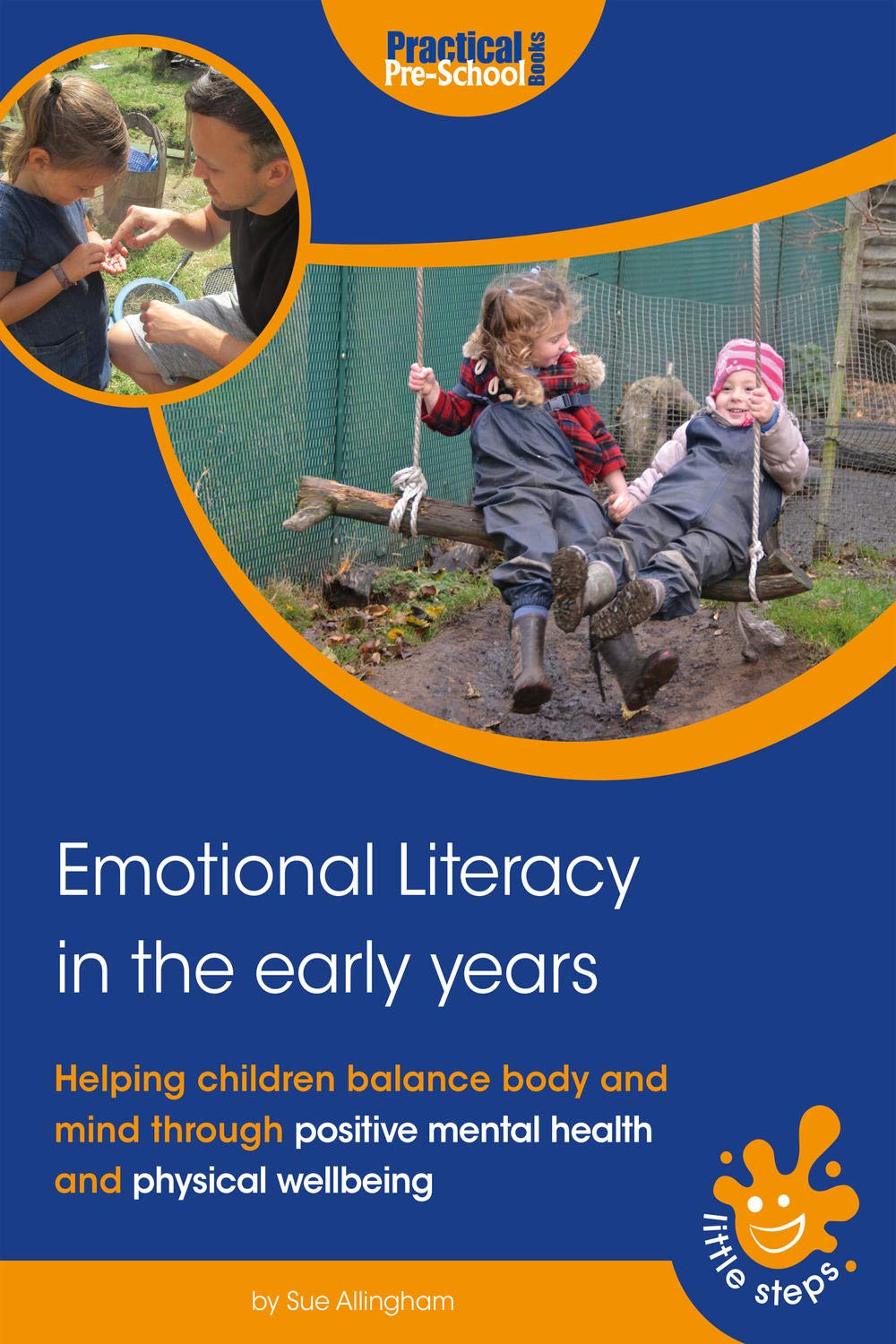
    As an Independent Consultant, Author and Trainer, Sue is known for her practical style of working through coaching, mentoring, modelling, training and working alongside. As Consultant Editor of EYE (Early Years Educator) her writing is familiar to many and she has written two books that support practice across the Early Years and into Key Stage One – Transitions in the Early Years and Emotional Literacy in the Early Years, both published by Practical Pre-School Books.

    View all posts

Watch the full podcast episode

You might also be interested in...

Follow us and share your voice