Singing as a support for cross-curricular learning

Publication date

8 July 2024

Author

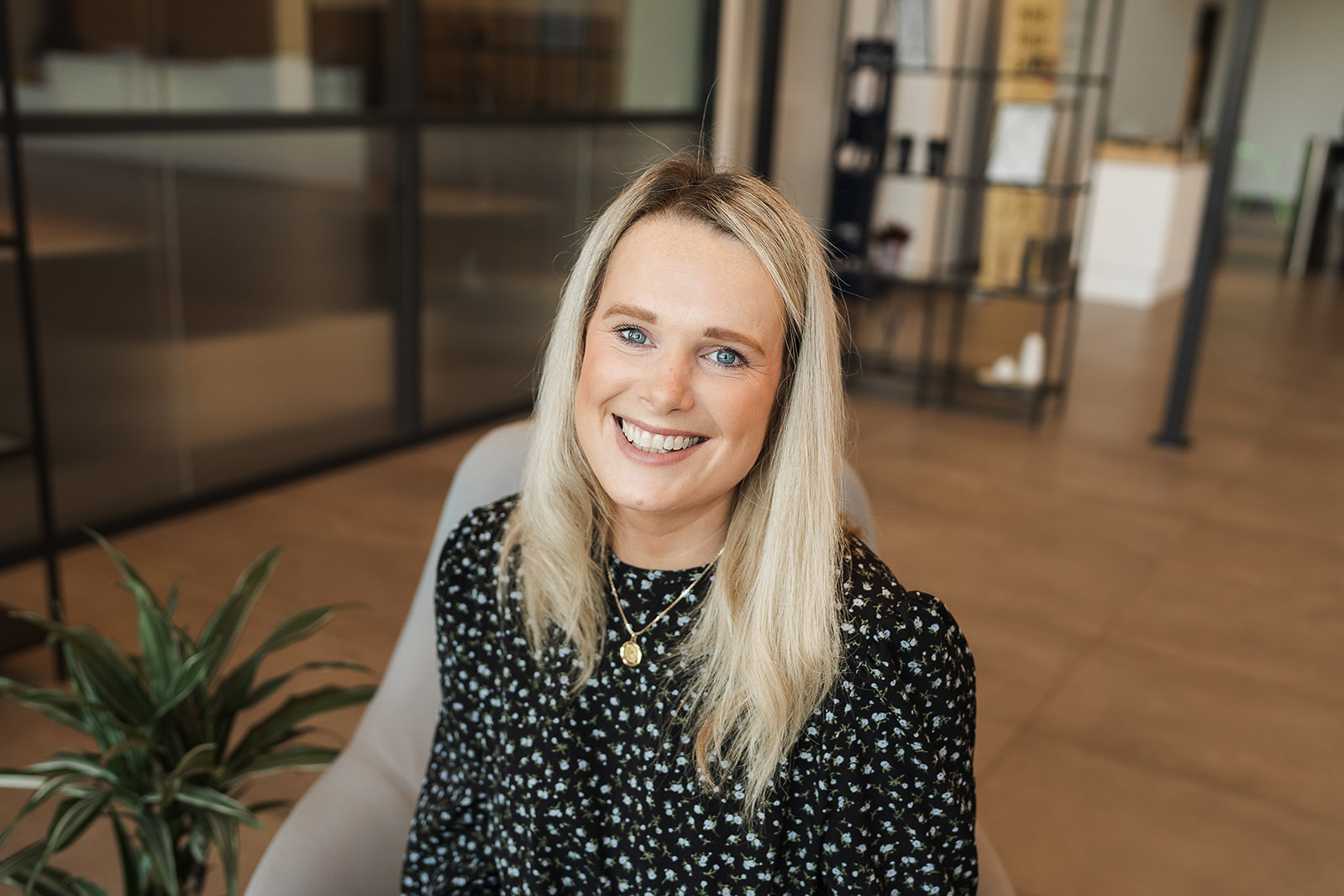
Primary school teacher Stephanie Warrender explains that singing can play a vital role in children’s brain development. Stephanie shares with us her story of how she discovered Songdrawing and used it in her classroom, as well as setting up her own company sharing this method.

Laulau Songdrawing Method:
Singing as a support for cross-curricular learning

Introduction

Laulau is a Finnish educational company, and they have brought their Songdrawing method to the UK through a new partnership. Stephanie Warrender is a primary school teacher and music educator who represents Laulau in the UK. She speaks about the importance of singing in the classroom and in every-day life, and shares with us her insights into what happens in our brains when we sing. 

Background

As a child, I have always loved music. This was anything from singing to playing instruments to listening to music and making music. My love of music went from a hobby to my degree, but I knew I didn’t want to be a professional ‘musician’, instead I wanted to use my musical skills in other ways.

While looking for musical opportunities in the workplace, I came across a Music Teacher role that didn’t need QTS. This was fantastic, and I was able to travel around schools teaching music such as samba drumming and singing.  I then moved onto becoming a cover supervisor full time in a school. The Headteacher at the time was eager to get me qualified and I was very fortunate to be offered a salaried route into teaching which meant I kept getting paid, had my own class and was able to attend all the CPD I needed to gain my QTS/PGCE.

During my PGCE year I went through rigorous training in most subjects, I was observed countless times and had multiple placements and meetings. However, I remember just 1 conversation, just 1 session about music education during my teacher training. No wonder non-specialists do not have the confidence in teaching music or singing with their class!

Since I became qualified, I have worked in all primary key stages (EYFS, KS1 and KS2), but the early years always held a special place in my heart. When I first entered the early years in my teaching career, I loved experimenting with music in the classroom. I would regularly sing songs relating to topics, encourage the children to find different sounds around the room, and build on other skills through music.

In 2019, I met Minna Lappalinen, a children’s songwriter and music educator from Finland. She owns a company in Finland called ‘Laulau Oy’. Laulau derives from the Finnish word Laululaukku which translates to “Singing Bag”. Minna delivers music and arts-based training to educators and therapists across Finland and she came to the UK to pilot her method ‘Songdrawing’ for our teachers in Bradford. I was blown away with Songdrawing. It embodies everything that the Early Years needs – singing, movement, mark-making, storytelling, holistic learning… As an EYFS teacher and a music specialist, this was everything I was looking for and it continued to exceed my expectations when using it with the children in my class.

What is songdrawing?

Songdrawing is a holistic form of art play which combines music, art, visual expression, bodily expression, movement and storytelling in a holistic/cross-curricular way. It is a way to inject the arts into the classroom in a provisional way that encouraged all areas of the prime curriculum. I started to use Songdrawing weekly, sometimes even daily, and saw incredible results in the children’s confidence, self-esteem, social skills, mark-making skills and more. Basically, Songdrawing is the process of singing and/or drawing simultaneously. It can support drawing of different figures, letters, geometric forms, emotional states, rhythms or pitches. Anything is possible!

My journey with Laulau Learning UK started when a friend who worked in another school was asking me the typical question of EYFS – how do I get this group of boys to write/mark make? It gave me the idea of spreading Songdrawing and other Laulau methods around the UK, as I wanted other educators to gain from it what I had gained. Songdrawing is a valuable tool which can provide more knowledge and confidence to teach music.

It has now been 18 months since I started to train others on our different music and art working methods and it has taken me to places that I never thought I would have been. It has also made me delve into the neuroscience of singing and what wonders it does for our brain.

The science behind singing

Since starting Laulau, I have had a keen interest in the neuroscience of music. When they say that ‘timing is everything’, it really actually is! Some ground breaking research has been conducted by Kali Carr and it was found that if a 3 or 4-year-old child was able to keep a steady beat on a drum (we’re talking around 8 beats), then the right parts of their brains were connected and it is likely they are going to exhibit normal or typical development in their reading by the age of five! (Carr et al, 2014).

Another study found that singing to our babies helps create a bond between mother and baby and helps moderate both baby’s and mother’s emotional states. Singing is the most powerful tool for emotional communication at a young age when traditional ‘communication’ hasn’t been developed yet. Research shows that when we sing in a playful way, our excitement is higher, and the child’s excitement matches it. And when a lullaby is sung (especially between a mother and child), excitement goes down and the adult and child sync up. Through this research, it was also found that babies and children pay attention for longer when we are singing, as opposed to speaking (Collins, 2018).

When I delved into this research, I was both impressed but not surprised. I reflect back at my own teaching and how the children in my class (5 years old) can remember all the continents in the world purely because I taught it through song.

The most important scientific element to me as both a parent, teacher and music educator is that singing connects very directly and clearly to our sense of wellbeing (Collins, 2018). Neuroscientists have now discovered that a population of neurons in our auditory cortex (the part of the brain that responds to sound) light up when we are singing or hear singing, and not other types of music. But building on this, research also points to the fact that active music-making is so much more useful than passive music listening (singing with the children and not just popping on a YouTube clip). This is why we need to get our educators singing and making active music with children, and instil the confidence in them to do this.

Hands up who would say they ‘can’t sing’ and laugh it off? Why are we so quick to say this? The answer is that most likely you have been told in your life that you can’t sing or that you are ‘out of tune’. Firstly, this is probably not the case, and secondly, who cares? Does a 3-year-old care that you are in tune? Not at all! Have you made their day by singing and moving with them and allowing them to take an active role in your singing? Absolutely!

If you are one of these many ‘I can’t sing’, then how would you feel if I told you that you do it without even noticing. The way we talk to babies and toddlers, with the ‘high-pitched voice’, has a special name. ‘Parentese’ or ‘motherese’ is when we use baby-talk, or in more scientific terms ‘infant-directed singing’. Even though we are talking, because of the changing of pitch that is happening in our voices, coupled with the change in emotion and volume, it is actually technically classed as singing. The most interesting thing is that babies/toddlers that are NOT exposed to infant-directed singing (parentese), can experience a delay in speech, ability to express themselves and managing their emotions (Nakata & Trehub 2004). Powerful stuff!

Music has such an important role to play with our senses and emotions. But alongside this, our motor skills, communication skills, physical development, self-esteem and more can all be improved through music and singing. So what are you waiting for? Get those vocal chords warmed up!

Progression of music

Educational progression isn’t talked about enough within music education. There’s a lack of knowledge in schools about the diversity of musical careers available, which means fewer students progress to further music education or careers within the music industry, and fewer appreciate the wealth of benefits provided by a life enriched with music, because it really is truly enriched!

Key takeaways

  • Singing can play a vital role in children’s brain development
  • Songdrawing is a holistic method which can support drawing of different figures, letters, geometric forms, emotional states, rhythms or pitches.
  • Singing to babies helps to create bonds and regulate emotional states
  • Parentese/motherese is classed as a form of singing
  • Having the ability to keep a beat at age 3-4 supports reading development

Critical considerations

  • Do you sing with children in your setting/home?
  • Do you create active-music opportunities for children?
  • What does music look like in your setting/home?
  • Have you got the confidence to sing without backing music in front of the children and if not, why is that?
  • Have you considered the learners in your setting and how music and singing could be a tool to progress children in areas they are struggling?
  • Do you reflect on your own practice?

Explainer

Neuroscience – 

A study of the nervous system, with a focus on the brain.

‘Parentese’/‘motherese’-

When we use baby-talk, or in more scientific terms ‘infant-directed singing’.

Further reading and resources

Carr, K.W., White-Schwoch, T., Tierney, A. T., Strait, D. L., & Kraus, N., 2014.. Beat synchronization predicts neural speech encoding and reading readiness in preschoolers. Proceedings of the National Academy of Sciences, 111 (40)

Collins, A., 2018. The Lullaby Effect: The science of singing to your child.

Nakata, T., & Trehub, S E., 2004. Infants’ responsiveness to maternal speech and singing. Infant behaviour and Development, 27 (4).

About the author

  • Teacher, Music Educator & Consultant, Director of Laulau Learning UK

    Stephanie still continues to work as a primary school teacher, as well as being the Director of Laulau Learning UK (Emva Education Ltd). She feels that it gives relevance to the training and Stephanie is able to develop the training that works for the UK education system.

    Her role as teacher also stretches to Music Lead/Director in the school she works at, which consists of choirs, singing assemblies, performances and general progression of music throughout school. Stephanie also teaches the Ukulele to children and has recently been interviewed and on the front cover of a Music Teacher magazine.

    View all posts

Watch the full podcast episode

You might also be interested in...

Follow us and share your voice