A personal journey into storytelling
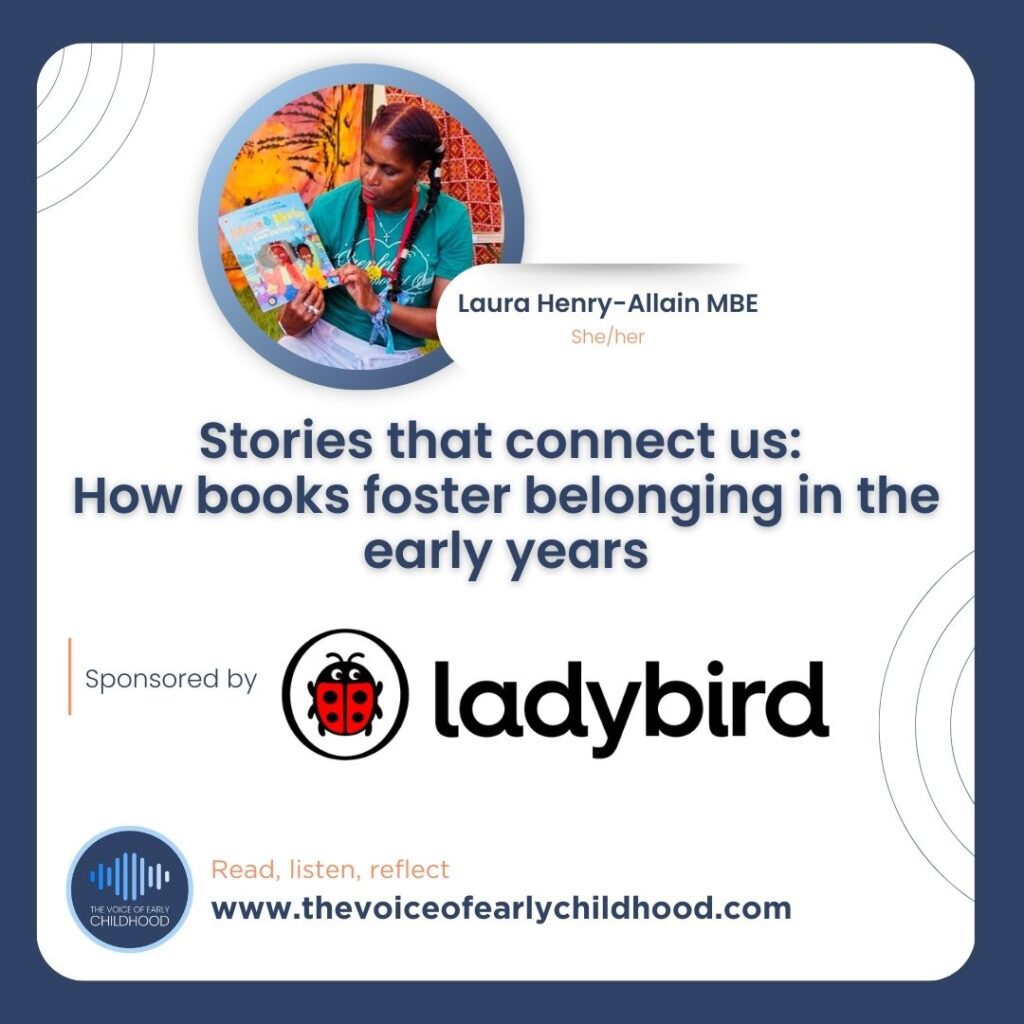
Laura opens the conversation with a transparent and heartfelt insight into her own relationship with books. As someone who identifies as “super dyslexic”, she challenges the assumption that dyslexia excludes someone from becoming a writer. “People think, ‘But you’re a writer—how can you be dyslexic?’” she says. “You meet one dyslexic person, you’ve met one dyslexic person.”
Books offered Laura a means of escape and connection as a child growing up on a council estate. Her experiences with a small but impactful local library shaped her understanding of how books can support children emotionally, socially and cognitively. They became her foundation—not just as a reader, but as a writer, educator, and advocate.
Belonging through representation
Central to Laura’s message is the idea that books allow children to “see themselves” reflected in the stories they hear. This, she argues, is where a true sense of belonging begins. One of her books, My Family, Your Family, introduces diverse family structures—families with two dads, two mums, or kinship carers—making visible the kinds of families often absent in traditional narratives.
When children recognise aspects of their own lives and identities in a story, it sends a powerful message: “You belong.”
Laura recalls a moving moment when a two-year-old pointed at a character in Maya and Marley and the Great Big Tidy Up and said, “That’s my daddy.” The recognition was immediate, emotional, and affirming. Stories like this highlight the importance of representation—not as a ‘nice to have’ but as an essential element of inclusive practice in the early childhood profession.
Books are not just for the book corner
Laura challenges a limited view of books as objects confined to the book area. Instead, she encourages educators to “have books everywhere”—indoors, outdoors, in transitional spaces, and even in entrance areas for families. This creates a rich literacy environment and embeds reading into daily routines and play.
Books, Laura argues, are not about financial privilege. Second-hand shops, car boot sales, and community sharing schemes are all valuable ways of ensuring children have access to books in early years settings and at home. Her practical suggestions extend to home environments too—encouraging parents to create reading tote bags for outings, complete with books, colouring materials, and small games as alternatives to screens.
Storytelling as an invitation to dialogue
Beyond reading, Laura speaks passionately about storytelling as an active, expressive, and relational experience. Her advice to educators and parents is simple: “Just read. Your child isn’t going to judge you.” It’s not about dramatic performance—it’s about connection.
She has developed a downloadable poster, Reading is Everywhere, (see extra resources section below) which visually represents all the everyday opportunities to share books with children—in the car, on the bus, at the park. This approach reframes reading as something dynamic and lived, not just a quiet-time activity.
Talking about challenging topics
A critical theme explored in the episode is how books can help educators navigate complex conversations around identity, race, difference, and inclusion. Laura is clear: “Children are never too young,” she says, to start having these conversations—when done in an age-appropriate and sensitive way. Books like My Skin, Your Skin introduce these topics through gentle, relatable narratives, beginning with everyday observations about differences and similarities.
Laura challenges the idea that talking about race is inappropriate in the early years, pointing out that some children as young as three may already be experiencing racism. Avoiding these conversations does not protect children—it leaves them unsupported. Instead, Laura encourages educators to scaffold children’s understanding using stories, props, and natural dialogue. For instance, if a child comments on skin colour, this can be acknowledged and explored respectfully. “Children say what they see,” she explains. “It’s our role as educators to support their understanding.”
Beyond ‘planning in the moment’
Laura offers a critical reflection on curriculum approaches that rely solely on ‘following the child’s interest’. While responsive planning has clear benefits, she argues that it must be balanced with intentional provocations that expand children’s worldviews—particularly when it comes to diversity and representation.
“If we’re not planting invitations and provocations, we’re denying children their right to understand their place in the global village,” she says.
This links closely to cultural capital and the importance of exposing children to experiences and perspectives beyond their immediate environment. Laura encourages educators to think deeply about what they are offering, and what assumptions are being made when we say “we don’t have children like that here”.
Mirrors, windows and sliding doors
Laura revisits a well-known framework by Dr Rudine Sims Bishop, which describes children’s books as:
- Mirrors, where children see themselves and feel validated
- Windows, where they view the lives of others
- Sliding doors, where they step into others’ experiences and expand their empathy
Using this lens, she challenges the notion that books about diverse communities are only necessary when those communities are visibly present in the setting.
Children need both mirrors and windows to develop a secure sense of self and an inclusive understanding of others.
Modelling and mentorship
Laura’s work goes far beyond the books she writes. Her author visits, workshops, and storytelling sessions also serve as role modelling opportunities for educators and families. She provides not just stories, but strategies—how to use props, how to ask open-ended questions, how to make storytelling interactive and joyful. She proudly notes that in some early years settings, Ofsted inspectors have specifically mentioned her visits as contributing to children’s literacy development and educators’ confidence in reading practices.
Welcoming 2026: a national year of reading
Laura is welcoming the year of 2026, which marks the next National Year of Reading—a government and National Literacy Trust initiative returning after almost two decades. She’s already involved in events and keynotes linked to this initiative, with a focus on joy, access, and community connection through books.
TVOEC will be celebrating too, with the Voice of Early Childhood Bookshelf—a growing library of recommended children’s books that support inclusive conversations and complex themes. As Laura says, “books feed into all areas of learning”—not only literacy, but wellbeing, identity, communication and critical thinking.
Final reflections
Laura’s message is both personal and universal. Stories shape who we are. They allow us to feel seen, to feel part of something bigger. For children in early childhood, that sense of belonging—of being loved, valued and recognised—is foundational.
As educators, families and communities, we are all storytellers. The choices we make about the stories we share—and the conversations we have around them—can shape a child’s worldview.
So let us ask ourselves:
- Do the books in our settings reflect the lived experiences of all children?
- Are we using stories to spark meaningful conversations?
- How are we supporting families to embed reading into everyday life?
- And how can we ensure every child feels they belong—in the story, and in the world?
We’d love to hear from you. What books have helped foster a sense of belonging in your setting or home? How are you using stories to open up conversations and reflect the diversity of the world children live in? Share your thoughts on social media and tag The Voice of Early Childhood.